
That's our living room prior to the fire. The ceiling is causing us some problems because it's unique to the block. The same architect designed every single house so they're more or less similar -- in fact, one house is almost a perfect replica -- but we're the only ones on the street who had that paneling between the beams. Everyone else just has white plaster instead.
This picture is the best we have, so we showed it to everyone involved in rebuilding the house. One day the contractor called us over to discuss the little finishes to our house, e.g. the size of the trim along our doors and the design of the windowsills. But when we started talking about the living room ceiling, it started getting weird. If we were to look parallel to the paneling, we'd see something like this:
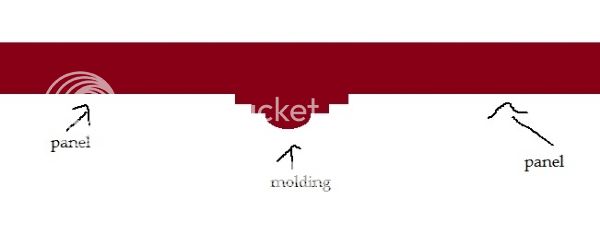
Those lines you see running across perpendicular to the beams? That's the molding or little decorative piece of wood you usually see near ceilings or wrapping around doors. It helped divide the panels and even wrapped along the side of the beams. However when the contractors started talking, we quickly realized they were envisioning something like this:
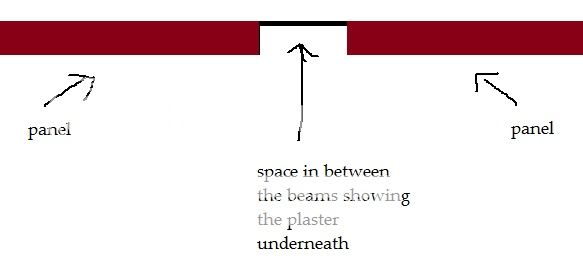
When they saw the picture, somehow their interpretation was instead of molding, there were little spaces in between each panel, which gave the effect of them floating. For me who knew the reality I just cannot imagine how they conceived this, but the light reflecting off looked like plaster and they believed the shadows represented a little valley. Thankfully we were there to put all doubts aside and say no, we were dealing with a convex situation and not a concave.
If this were an academic situation, there'd be a whole colloquium where scholars would blow up that picture and debate whether it was molding or plaster. And ultimately there'd be no answer and everyone would disperse to write in journals and periodicals defending their side. I guess that's why people hate the humanities sometimes; it's really hard to be right. I believe in my field there is a "truth" based on facts, but with so little evidence we can't reach it. It happens all the time in archaeology; you have to gather all the information together to paint a story, and every archaeologist comes back with a different narrative. The same thing during court cases with each side seeing the forensic evidence in a different light. Even for opinionated fields like English and art history probably have a "truth" to them, but unfortunately the creator is usually dead so we can't ask. How do you know that the author intended this scene with the dogs barking at each other to represent the tension in the protagonist's life? What if the author just simply wanted a scene with dogs barking?
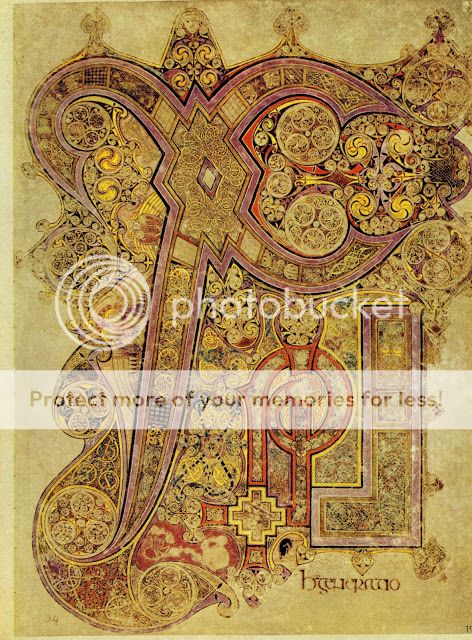
At the end of the day, we were around to tell the contractors that they were wrong and corrected it, but I wonder what other people from history would say if they saw us now. I'm fairly certain if we had a time machine a lot of egos would be crushed. People would come and say, "No, you fucking idiot. You wrote a 200-page book about me and were completely fucking wrong about everything." Hell, I've read over 200 pages just about this one page from a manuscript and all of its symbolism. I'd love for the artist just to come back and say, "No, I just wanted to create a pretty picture. I don't know what you're talking about with the moon, the Eucharist, and fertility. It's just a fancy X, R, and I."
Wow, the set up for my point took fucking forever this time around.

No comments:
Post a Comment